Anet ET4 Reviews: See Why 0 Shoppers Rated It 0 Stars!
Everyone’s got opinions. We collected 0 of them to see if the Anet ET4 3d printer really earns that 0/5 rating.
 Supermod
  Moderator
 Recaptor
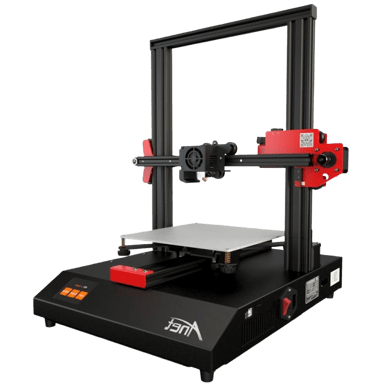
 Anet ET4 3D Printer Review: A Beginner-Friendly Miniature Prototyping Solution
In the world of affordable 3D printing, the Anet ET4 stands out as a compact, user-focused FDM/FFF printer tailored primarily for beginners interested in prototyping and miniatures. Released in 2020, this model caters to hobbyists and newcomers who seek a straightforward yet capable machine that balances price with essential features. On paper, the ET4's prebuilt but assembly-required design and its moderate footprint suggest an accessible entry point without overwhelming complexity. Its specs hint at reliable performance with a focus on practical usability rather than high-end industrial output, making it appealing for casual creators and those stepping into 3D printing fundamentals.
Detailed Specs & Features
The Anet ET4 is characterized by a moderate build volume, with an 8.66-inch width, 8.66-inch depth, and an approximate 9.84-inch height, creating a build area suited for small to medium-scale projects. Its FDM/FFF technology naturally supports commonly used filaments like PLA, ABS, PETG, and TPU with a filament diameter of 1.75mm. These are the materials favored for their balance between flexibility, durability, and ease of printing, which aligns well with the beginner user profile that the ET4 targets.
Under the hood, the print speed claims a theoretical maximum of 150 mm/s, but real-world effective printing is closer to 60 mm/s, which is typical for ensuring quality prints rather than pure speed. This balance is reflected in its print accuracy of 100 microns, an excellent measure that ensures crisp detail for miniatures and prototypes alike. Its single extruder setup runs hot with a maximum extruder temperature of 482°F, paired with a heated bed that can reach up to 212°F, enabling it to handle a variety of filament types that require heat to adhere properly and reduce warping.
The auto bed leveling feature is a measurable convenience, improving first-layer reliability, especially important to beginners who may struggle with manual adjustments. The printer's range of power supplies of 100-240 volts, along with an internal power unit that consumes 360 Watts during operation, provides sufficient power while maintaining safety compliance, such as CE, RoHS, and FCC certifications. This adherence to safety standards builds trust with users about the build quality and electrical reliability, a crucial factor for consumer electronics.
Furthermore, the inclusion of overheat protection and an automatic shutdown on error signals a commitment to user safety. Much of the ET4's interaction is streamlined via a 2.8-inch touchscreen display with a resolution of 320×240 pixels, making navigation through menus intuitive and accessible. The presence of a power loss recovery system also adds practicality by allowing printing to resume seamlessly after disruptions, a feature often missed in printers at this price point.
User Experience & Performance (Based on Specs)
Design & Build
The ET4's design emphasizes compactness with dimensions roughly 16 by 15 by 20 inches, and a lightweight frame tipping the scales at about 7.5 kilograms. This Cartesian frame type and open enclosure reflect a typical desktop printer, offering ease of viewing but limiting environmental control. The open build plate is made of smooth glass and is removable, simplifying print removal. Still, it lacks features like chamber heating or air filtration, which are typically reserved for higher-tier machines. The printer includes standard Bowden extruder drive technology, which reduces the weight on the moving gantry, improving speed and reducing vibration issues. This setup is familiar territory for those entering the hobbyist printer area.Performance
In daily use, based on its specs, this machine targets a 90% success rate of prints and handles prints requiring a continuous runtime of up to 72 hours. First-layer calibration is automatic, a significant plus for reducing setup headaches and improving adhesion outcomes on the glass print bed. Bridging and overhang capabilities are moderately rated at 10 and 60 degrees, respectively, indicating the printer is competent for most basic to intermediate geometries found in prototyping and miniature model tasks. Though it lacks filament runout and jam detection sensors, its reliability is partly mitigated by a power-loss recovery function that prevents print disasters caused by power outages.Connectivity & Software
Connectivity options are limited but straightforward, offering USB and SD card support for file input, compatible primarily with STL and OBJ file formats. It integrates well with popular slicer software like Cura, minimizing barriers to entry for newcomers using free, well-supported applications. However, the absence of remote monitoring and cloud-based control reduces flexibility for remote or multi-printer management, which might be a drawback for users advancing toward more professional setups.Extra Features
Its suite of safety features, including two dedicated safety sensors, overheat protection, and auto shutdown on error, fosters confidence for a beginner user. The warranty period of one year aligns well with industry standards for consumer 3D printers, backed by access to spare parts and upgrade paths, including enclosure and camera options. However, no air filtration or sealed build chamber limits print material choices concerning fumes and particulates.Pros & Cons
Pros
- User-Friendly Auto Bed Leveling and Power-Loss Recovery
- Wide Compatibility With Common Filament Types, including Flexible TPU
- Reliable Safety Certifications and Overheat Protection
- Effective Print Speed Balance and Good Print Accuracy at 100 Microns
Cons
- No Filament Runout or Jam Detection, Which Could Cause Print Failures
- Lack of Enclosure and Air Filtration Limits Advanced Material Usage
- Basic Connectivity Without Remote or Cloud Features
- No Filament Dry Box or Auto-Loading, Increasing Manual Intervention
Price & Value for Money
Priced at only $349.85 at AliExpress, the Anet ET4 offers a solid entry into 3D printing technology, especially considering its 1-year warranty period and well-rounded power consumption profile. Given its comprehensive safety certifications and good basic hardware features, the pricing feels justified for hobbyists on a budget. This device may not suit professionals demanding multi-material capability and remote workflow control. Still, it is a sensible investment for users prioritizing reliability, moderate build volume, and easy learning curves.Quick Take
In short, if we look at the numbers alone, the Anet ET4 impresses as a budget-conscious beginner's 3D printer with dependable technical specs, especially for prototyping and miniature projects. It balances quality with accessibility but eschews many advanced features to maintain simplicity and affordability.Closing Recommendation
The ET4 may be ideal for beginner makers and small-scale modelers who desire a practical, easy-to-use unit with solid material compatibility and user safety measures. While it lacks some professional-grade enhancements, it nonetheless helps users achieve consistent printing results with minimal fuss. Those seeking extensive remote monitoring or multi-material printing might want to look elsewhere, but for foundational learning and cost-efficiency, this model performs predictably well.Verdict
Rating: Based on the specifications and overall feature set, we believe Anet ET4 deserves 4.1 out of 5.
- Winner Feature => Auto bed leveling and power-loss recovery enhance print reliability and user experience for beginners.
- Needs Improvement => Lack of filament runout detection and enclosure limits advanced material use and print protection.
Reviews 0
The good, the bad, and the brutally honest.Average Rating

More 3D Printers 453
Unlock more awesome finds.